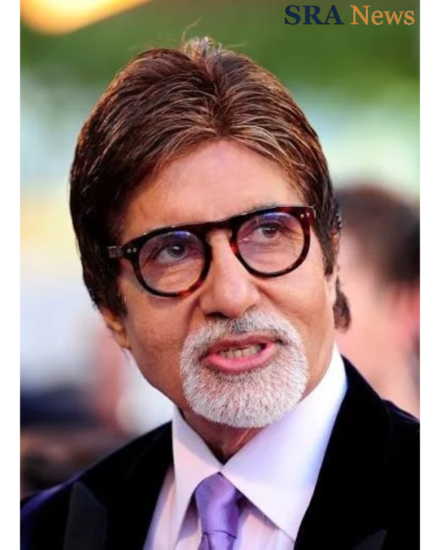
Amitabh Bachchan Biography
Read the complete Amitabh Bachchan biography, covering his early life in Allahabad, his breakthrough with Zanjeer and Sholay, the 1982 Coolie accident, his short political career, the ABCL crisis, his KBC comeback, four National Awards, and his family.
Quick Facts
| Full Name | Amitabh Harivansh Rai Bachchan |
| Birth Name | Amitabh Srivastava |
| Nicknames | Big B, Shahenshah of Bollywood, Angry Young Man, Star of the Millennium |
| Date of Birth | 11 October 1942 |
| Age | 84 years (as of October 2026) |
| Birthplace | Allahabad (now Prayagraj), Uttar Pradesh, India |
| Zodiac Sign | Libra |
| Height | 6 ft 2 in (1.88 m) |
| School | Boys' High School & College, Allahabad; Sherwood College, Nainital |
| Education | B.Sc., Kirori Mal College, University of Delhi (1962) |
| Father | Harivansh Rai Bachchan (Hindi poet) |
| Mother | Teji Bachchan (social activist) |
| Brother | Ajitabh Bachchan |
| Spouse | Jaya Bachchan (married 3 June 1973) |
| Children | Shweta Bachchan Nanda, Abhishek Bachchan |
| Daughter-in-law | Aishwarya Rai Bachchan |
| Grandchildren | Navya Naveli Nanda, Agastya Nanda, Aaradhya Bachchan |
| Profession | Actor, Film Producer, TV Host, Playback Singer |
| Years Active | 1969 – present |
| Debut Film | Saat Hindustani (1969) |
| Breakthrough Film | Zanjeer (1973) |
| Total Films | 200+ |
| Famous TV Show | Kaun Banega Crorepati (host since 2000) |
| Political Career | Lok Sabha MP, Allahabad (1984–1987), Indian National Congress |
| Residence | Mumbai, Maharashtra |
| Diet | Vegetarian; teetotaller and non-smoker |
Ask anyone in India to name one film star, and there’s a decent chance you’ll hear “Amitabh Bachchan” before you’ve finished the question. Your grandparents probably saw him as the angry young man in a single-screen theatre. Your parents might remember him as the heartbroken father in Baghban. And if you’re under 30, you most likely know him as the man in the KBC chair. Not many actors get to belong to three generations at once.
In the 70s and 80s, the gap between him and every other hero was enormous. François Truffaut, the French director, called him a one-man industry. Box Office India’s yearly list of top actors had him at number one for sixteen straight years, from 1976 to 1991. Sixteen years, and nobody caught up.
Where it started
Allahabad, 11 October 1942. That’s where he was born, in the city we now call Prayagraj.
His dad, Harivansh Rai Bachchan, was a Hindi poet, and a big one. If you studied Hindi in school, you’ve probably come across Madhushala. His mom, Teji Bachchan, was a social activist who, so the story goes, always wanted her son at the centre of the stage.
The surname is a story in itself. The family were Srivastavas. But his father was against the caste system and had been writing as “Bachchan” for years. So when Amitabh was being admitted to school, his parents simply wrote down Bachchan, and it’s been the family name ever since.
Amitabh almost wasn’t Amitabh, either. His parents were leaning towards Inquilaab, from the slogan Inquilab Zindabad. It was the poet Sumitranandan Pant who suggested Amitabh, and that’s what they went with.
He went to Boys’ High School in Allahabad and then Sherwood College in Nainital, and did his B.Sc. at Kirori Mal College in Delhi, graduating in 1962. Funny thing: he’s admitted on KBC that picking science was a mistake. He just couldn’t keep the trigonometry formulas in his head.
The voice that got rejected
Here’s the bit everyone loves. Before films, he auditioned to read the news on All India Radio. He didn’t make it. Yes, that voice.
He ended up in Calcutta instead, working as an executive at a firm called Bird & Company and doing plays in his spare time.
Early films, mostly flops
His film career began without his face. He narrated Mrinal Sen’s Bhuvan Shome in 1969. Saat Hindustani, directed by K.A. Abbas and released the same year, was the first time he actually acted on screen.
Anand came in 1971. He played Dr. Bhaskar Banerjee, the serious “Babu Moshai” whom Rajesh Khanna’s character keeps teasing, and he won the Filmfare award for Best Supporting Actor. Good start, right? Not really. Film after film failed after that, and by the time he was 30, plenty of people in the industry thought he was finished.
Then Zanjeer happened
Salim Khan and Javed Akhtar had written a cop who barely smiled, and nobody wanted to play him. The big heroes of that time were romantic types, and they passed. Salim–Javed kept pushing for this tall, lanky actor nobody was betting on.
Zanjeer came out in 1973 and was a massive hit. Inspector Vijay, the angry young man, became the template for Hindi film heroes for years after that.
Then 1975 gave him Deewaar and Sholay. Honestly, it’s hard to think of a better year any Hindi actor has had. Sholay broke every box office record India had at the time.
He won Filmfare Best Actor for Amar Akbar Anthony (1977) and again for Don (1978). Even now, someone at a wedding will throw out “Don ko pakadna mushkil hi nahi, naamumkin hai” and the whole table gets the reference. And 1978 was ridiculous, by the way: six releases, six successes.
He wasn’t only about fists and dialogue, though. Watch Kabhi Kabhie, where he’s a poet who doesn’t get the girl. Or Chupke Chupke, which is just pure fun. Namak Halaal too.
Coolie, 1982
On 26 July 1982 he was shooting a fight scene for Coolie. He jumped, the corner of a table caught him in the stomach, and he was rushed to hospital with a ruptured spleen. For months it was touch and go.
Fans stood in long lines outside the hospital. People prayed for him all over the country. When he pulled through, Manmohan Desai rewrote the climax. In the original script his character died, and after all that, Desai wasn’t going to kill him on screen. If you watch the film, it freezes at the exact moment of the real injury and a caption comes up. Coolie was the biggest hit of 1983.
In 1984 doctors also found he had myasthenia gravis, a disorder that weakens the muscles. It hit him hard mentally as well. For a while, he’d tell people before every release that the film was going to flop.
Parliament, briefly
Rajiv Gandhi had been a friend since his Delhi days, and in 1984 Amitabh contested the Lok Sabha election from Allahabad on a Congress ticket. He was up against H.N. Bahuguna, a former UP Chief Minister, and took 68.2% of the vote. By July 1987 he’d resigned and was back in films.
The bad years
Agneepath (1990) won him his first National Award for Best Actor, but by then his films weren’t working the way they used to. After Khuda Gawah in 1992, he took a break.
In 1996 he started ABCL, Amitabh Bachchan Corporation Ltd. The idea was to do everything, from films and music to TV and events. Then came the 1996 Miss World show in Bangalore, which ABCL backed and lost heavily on. The company went under and he was buried in debt. At one point a court even stopped him from selling his Juhu bungalow, Prateeksha, until bank loan cases were settled.
Asking for work
For me, this is the most human part of his story. In 2000, broke and out of films, he went to Yash Chopra, the man who’d directed Deewaar and Trishul, and asked him straight out for a role. Chopra gave him Mohabbatein.
The same year, Star TV launched Kaun Banega Crorepati with him as host. Between the two, he was back.
KBC and the second innings
KBC made him part of people’s evenings at home. He’s hosted every season except the third, which Shah Rukh Khan did in 2007. Season 17 started in August 2025, and “Deviyon aur sajjanon” still sounds exactly the same.
The films changed too. He stopped playing the hero and started picking odd, interesting parts. In Black (2005), he’s an ageing teacher to a deaf-blind girl. In Paa (2009), he’s a 13-year-old with progeria, with Abhishek playing his father. In Piku (2015), he’s a Bengali dad who won’t stop talking about his constipation. Each one got him the National Award for Best Actor. Add Agneepath and that’s four, a record in that category.
He did a small part in Hollywood’s The Great Gatsby (2013), next to Leonardo DiCaprio. And in 2024, at 81, he did his first Telugu film, playing Ashwatthama in Kalki 2898 AD. That film made over ₹1,000 crore. As of 2026 he’s shooting Kalki 2 and getting ready for KBC 18. At 84.
Family
He married Jaya Bhaduri on 3 June 1973, a few weeks after Zanjeer released. Their daughter Shweta is an author, and their son Abhishek is an actor. Abhishek is married to Aishwarya Rai, and they have a daughter, Aaradhya.
He’s said he doesn’t drink or smoke, and he’s vegetarian.
Outside films
He’s paid off loans for farmers in Andhra Pradesh and Vidarbha and, in 2019, for more than 2,000 farmers in Bihar. Anyone who watched TV in the 2000s will remember his polio ads (“do boond zindagi ki”). Later he worked with the WHO on hepatitis awareness.
In 1999 a BBC online poll picked him as the greatest star of stage or screen of the millennium. The BBC itself admitted that a lot of people in the West had probably never heard of him. In 2000, Madame Tussauds in London made his wax statue, the first one of a living Asian.
Saat Hindustani was in 1969. He’s still working.
Career Timeline
- 1962
Graduation
Completed B.Sc. from Kirori Mal College, University of Delhi
- 1960s
Corporate Job in Kolkata
Worked as a business executive with Bird & Company and acted in theatre
- 1969
Film Debut
Narrated Bhuvan Shome and made his acting debut in Saat Hindustani
- 1971
Anand
Won his first Filmfare Best Supporting Actor award opposite Rajesh Khanna
- 1973
Zanjeer
Became a star with the "angry young man" role; married Jaya Bhaduri on 3 June
- 1975
Deewaar and Sholay
Two landmark films that made him the biggest superstar of Hindi cinema
- 1977
Amar Akbar Anthony
Won his first Filmfare Best Actor award
- 1978
Don
Won his second Filmfare Best Actor award; all six releases of the year were hits
- 1982
Coolie Accident
Suffered a near-fatal injury on 26 July while shooting a fight scene
- 1984
Entry into Politics
Won the Allahabad Lok Sabha seat with 68.2% of votes
- 1987
Resignation
Resigned as Member of Parliament in July 1987
- 1988
Shahenshah
Returned to films with one of the year's biggest hits
- 1990
Agneepath
Won his first National Film Award for Best Actor
- 1992
Khuda Gawah
Announced semi-retirement from films after this release
- 1996
ABCL Launched
Started Amitabh Bachchan Corporation Ltd; the company later collapsed
- 2000
Mohabbatein and KBC
Revived his film career and began hosting Kaun Banega Crorepati
- 2005
Black
Won his second National Film Award for Best Actor
- 2007
The Last Lear
Appeared in his first English-language film
- 2009
Paa
Won his third National Award; hosted Bigg Boss season 3
- 2010
Kandahar
Made his Malayalam film debut with Mohanlal
- 2013
The Great Gatsby
Made his Hollywood debut with Leonardo DiCaprio
- 2015
Piku
Won his fourth National Film Award for Best Actor
- 2016
Pink
Acclaimed role as a lawyer in a courtroom drama
- 2019
Dadasaheb Phalke Award
Received India's highest cinema honour on 29 December 2019
- 2020
Gulabo Sitabo
Won the Filmfare Critics Award for Best Actor
- 2022
Brahmastra Part One: Shiva
Part of the highest-grossing Hindi film of 2022
- 2024
Kalki 2898 AD
Telugu debut as Ashwatthama in a film that grossed over ₹1,000 crore
- 2025
KBC Season 17
Returned as host of Kaun Banega Crorepati from 11 August 2025
- 2026
Kalki 2 and KBC 18
Began shooting Kalki 2 in Hyderabad and prepared for KBC season 18
Awards & Honours
- Padma ShriFourth-highest civilian honour, Government of India (1984)
- Padma BhushanThird-highest civilian honour, Government of India (2001)
- Padma VibhushanSecond-highest civilian honour, Government of India (2015)
- Dadasaheb Phalke AwardIndia's highest cinema honour, for the year 2018, presented on 29 December 2019
- Legion of HonourFrance's highest civilian honour (2007)
- National Film Award – Best NewcomerSaat Hindustani (1969)
- National Film Award – Best ActorAgneepath (1990)
- National Film Award – Best ActorBlack (2005)
- National Film Award – Best ActorPaa (2009)
- National Film Award – Best ActorPiku (2015)
- National Film Award – Best Feature Film in HindiPaa (as producer)
- Filmfare Best ActorAmar Akbar Anthony, Don, Hum, Black, Paa
- Filmfare Best Supporting ActorAnand, Namak Haraam, Mohabbatein
- Filmfare Critics Award – Best ActorAks, Black, Piku, Gulabo Sitabo
- Filmfare Lifetime Achievement AwardFirst-ever recipient (1991)
- Filmfare Superstar of the MillenniumSpecial honour (2000)
- Actor of the CenturyAlexandria International Film Festival, Egypt (2001)
- Asian Film Awards – Lifetime Achievement2010
- Order of AfghanistanConferred in 1991 after shooting Khuda Gawah in Afghanistan
- Honorary Citizenship of DeauvilleFrance (2003)
- Greatest Star of Stage or ScreenBBC Your Millennium online poll (1999)